
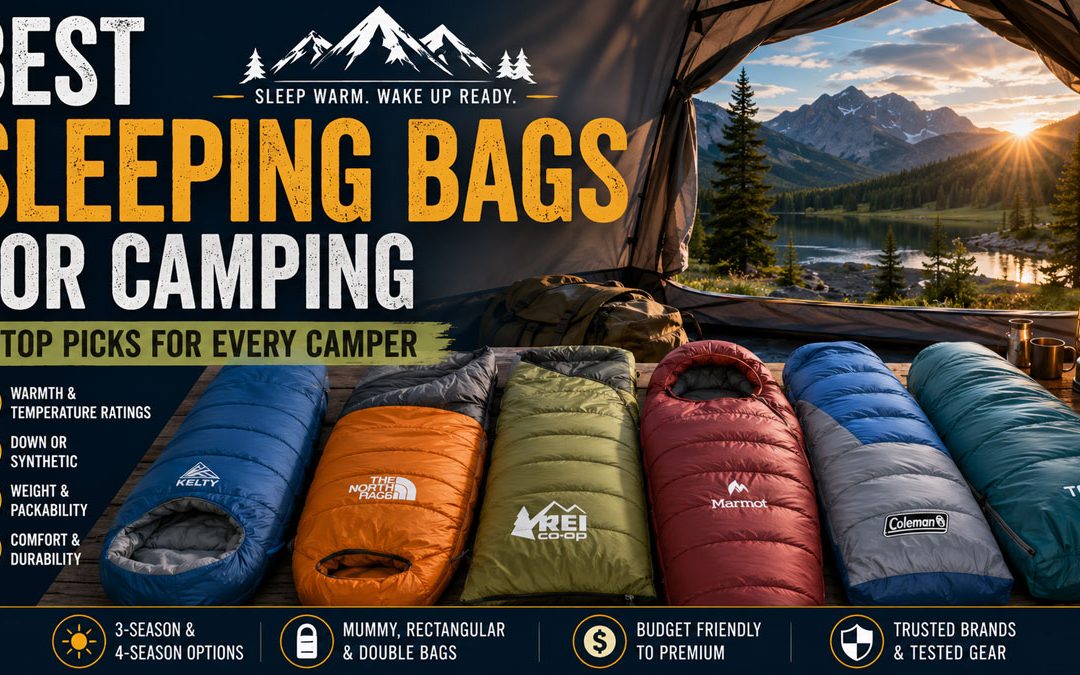
Best Sleeping Bags for Camping in 2026: 7 Top Picks for Every Camper
A good night's sleep can make or break a camping trip.
You can have a great tent, comfortable camping chair and beautiful campsite, but if your sleeping bag leaves you cold, cramped or uncomfortable at 2 a.m., the entire experience can quickly become miserable.
That's why choosing one of the best sleeping bags for camping is an important part of building your outdoor gear setup.
But choosing a sleeping bag isn't simply about finding the bag with the lowest temperature rating or the highest price.
You need to consider:
- Temperature rating
- Insulation type
- Sleeping bag shape
- Your body size
- Sleeping position
- Camping season
- Weight and packed size
- Moisture resistance
- Comfort
- Budget
For example, a spacious synthetic sleeping bag may be perfect for family car camping, while a lightweight down bag may be a better choice for someone who plans to carry their gear on a backpacking trip.
In this guide, we'll look at 7 sleeping bags worth considering in 2026, followed by a detailed buying guide to help you choose the right one.
Important: Prices, availability and specifications can change. Always check the current product listing and manufacturer's specifications before purchasing.
Best Sleeping Bags for Camping at a Glance
| Sleeping Bag | Best For | Insulation | Temperature Class |
|---|---|---|---|
| Kelty Cosmic Down 20 | Best Overall / Value | Down | 20°F class |
| REI Co-op Siesta Hooded 20 | Comfortable Car Camping | Synthetic | 20°F class |
| TETON Sports Celsius XXL 0°F | Cold Weather & Big/Tall Campers | Synthetic | 0°F |
| Coleman Brazos | Best Budget | Synthetic | 20–30°F class |
| The North Face Wawona 20 | Comfort-Oriented Camping | Synthetic | 20°F class |
| Kelty Tru.Comfort 20 Doublewide | Couples | Synthetic | 20°F class |
| Marmot Trestles Elite Eco 20 | 3-Season Synthetic Use | Synthetic | 20°F class |
These are not presented as products personally tested by WildGearHub. They are selections based on current 2026 outdoor gear research and published specifications/reviews from established outdoor gear publications. For example, CleverHiker's 2026 guide includes the Kelty Cosmic Down 20, REI Siesta Hooded 20, TETON Sports Celsius XXL, Coleman Brazos and Kelty Tru.Comfort 20 among its recommended camping sleeping bags.
1. Kelty Cosmic Down 20 — Best Overall Value
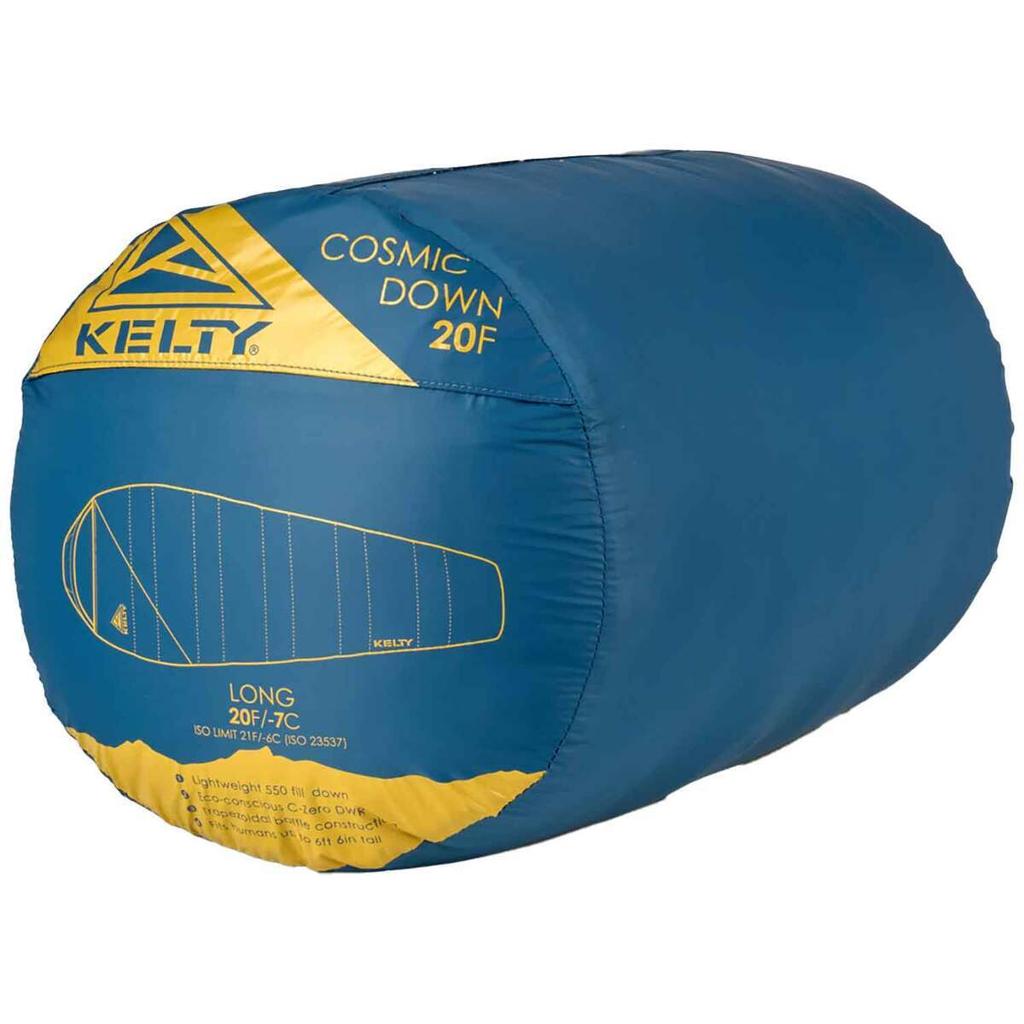
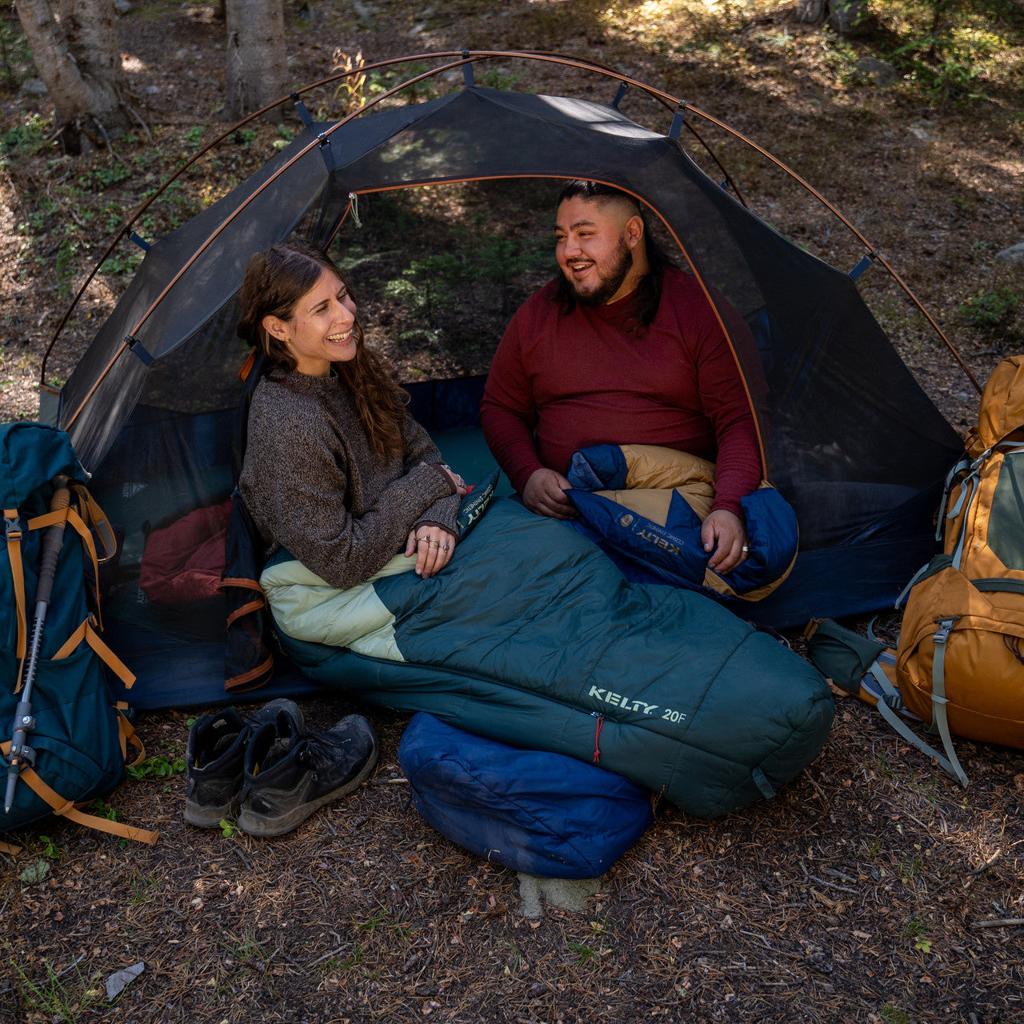
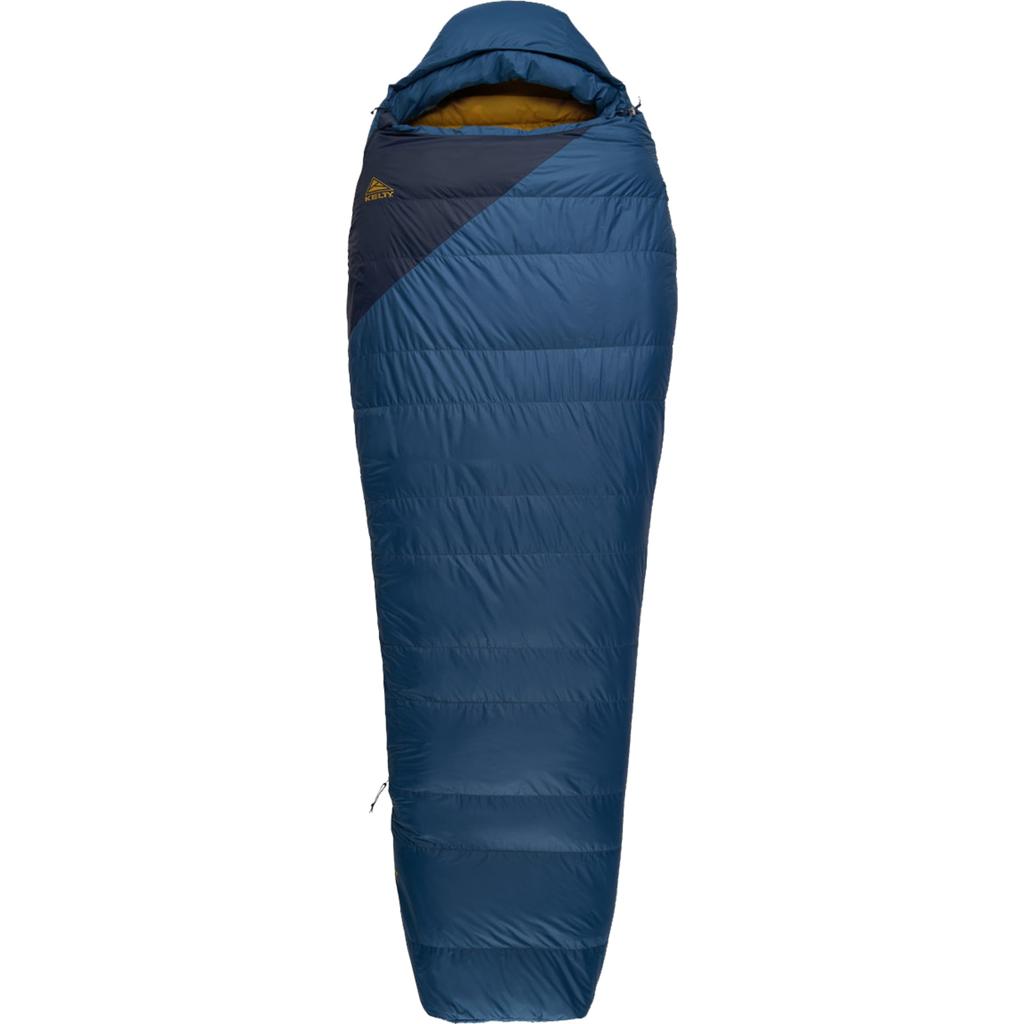
The Kelty Cosmic Down 20 is one of the most interesting choices for campers who want to move beyond basic synthetic sleeping bags without immediately spending premium-level money.
Current 2026 outdoor gear guides continue to highlight the Cosmic Down 20 as a strong value option. CleverHiker lists it as a value sleeping bag with a good warmth-to-weight ratio, while Backpacker also highlights it as a budget-friendly down option.
The current model uses down insulation and is designed around a mummy-style shape that helps reduce empty space around the body.
Why Consider It?
Down insulation generally offers an excellent warmth-to-weight ratio and compresses smaller than many synthetic alternatives.
That makes this type of sleeping bag attractive if you're planning to use it for both:
- Car camping
- Backpacking
- Weekend trips
- Three-season adventures
Pros
- Down insulation
- Good warmth-to-weight ratio
- Packs relatively small
- Suitable for multiple types of outdoor trips
- Strong value compared with many premium down bags
Cons
- Less forgiving when wet than synthetic insulation
- Mummy shape may feel restrictive to some sleepers
- Requires more care than a basic synthetic bag
Best For
Campers who want one sleeping bag that can work for both camping and occasional backpacking.
Amazon: [Check Latest Price →]
2. REI Co-op Siesta Hooded 20 — Best for Comfortable Car Camping
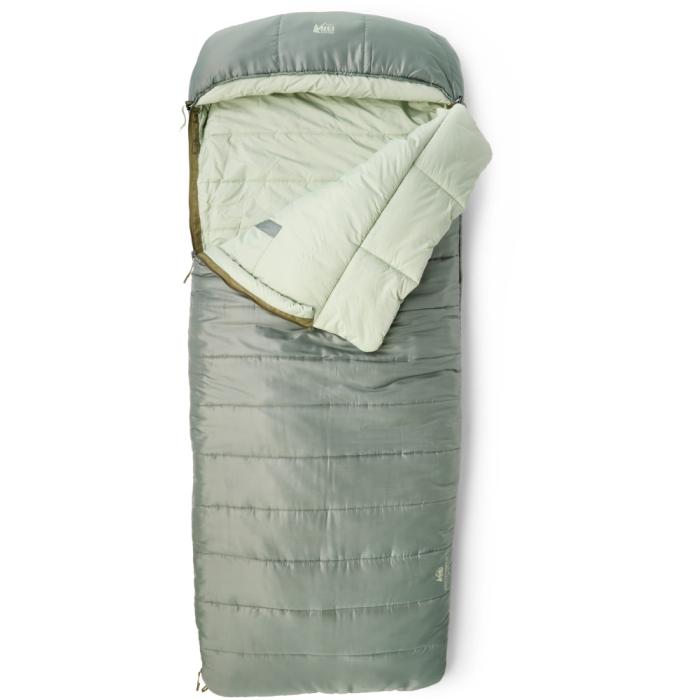
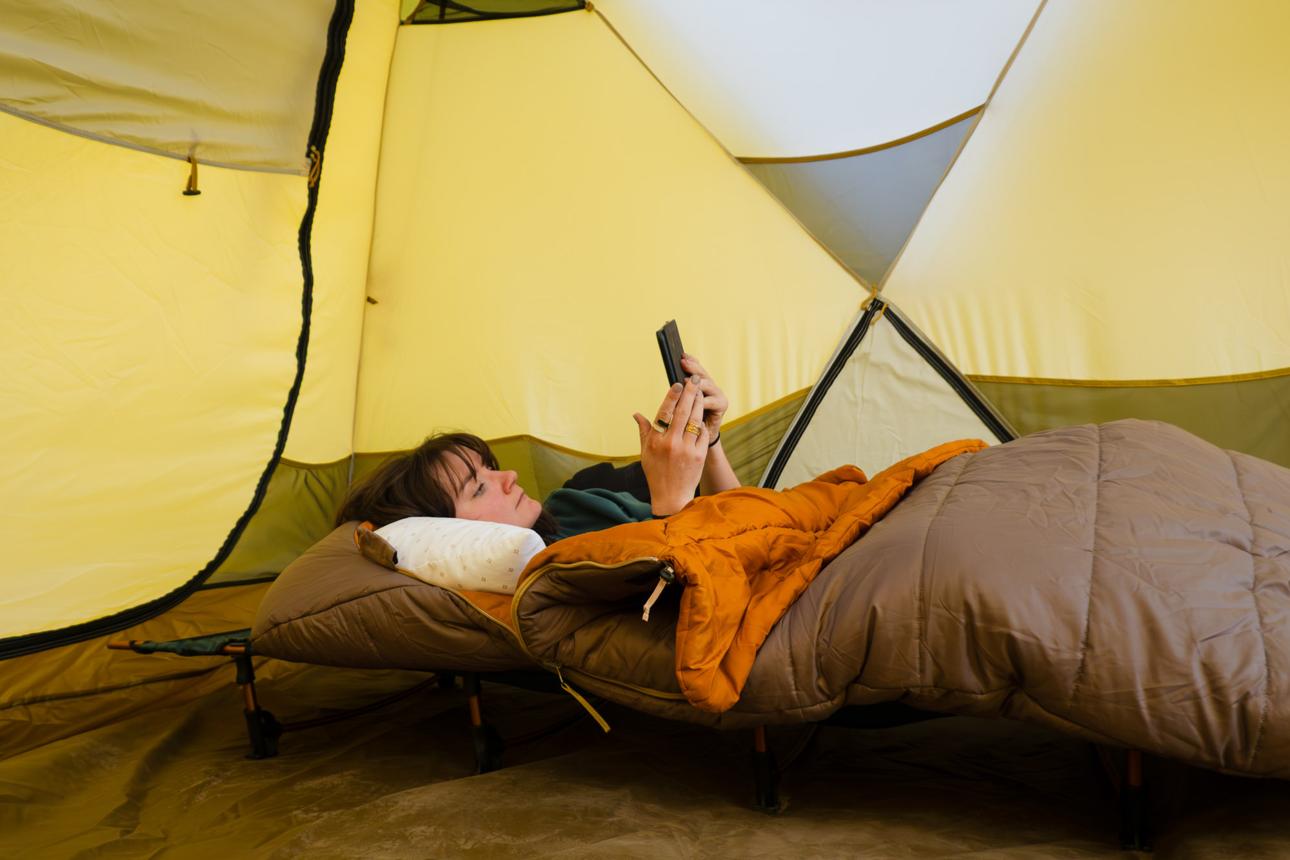
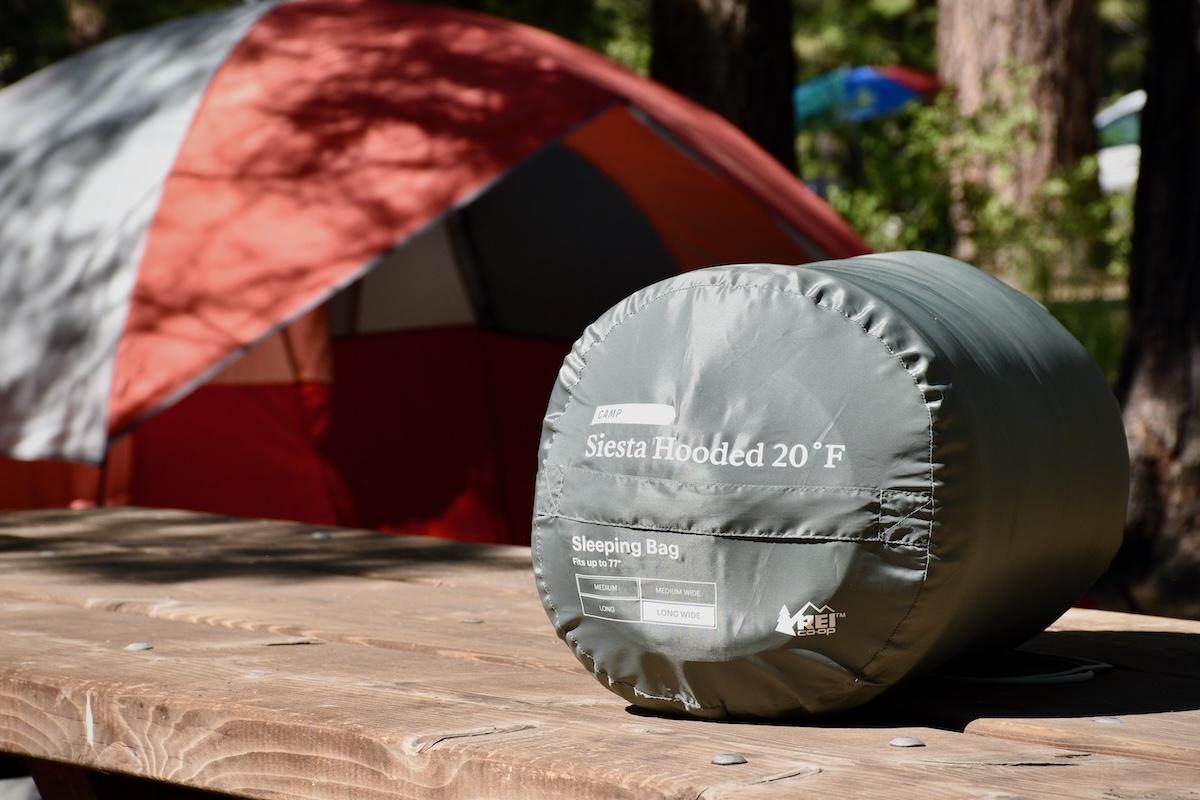
If comfort is more important than minimizing weight, a spacious car-camping sleeping bag can be a better choice than a narrow backpacking-style mummy bag.
The REI Co-op Siesta Hooded 20 is specifically designed around comfortable camping rather than extreme weight savings. CleverHiker's 2026 guide lists it as its top overall camping sleeping bag.
Its roomy design makes it appealing to campers who like to move around while sleeping.
Why Consider It?
A car-camping sleeping bag doesn't need to be ultralight because your vehicle does most of the transportation.
That means you can prioritize:
- Comfort
- Width
- Soft materials
- Extra features
- Easy entry and exit
REI's camping sleeping-bag guide notes that car-camping bags are often heavier but can provide more features and comfort than backpacking-oriented models.
Pros
- Spacious design
- Comfortable for car camping
- Good option for campers who dislike restrictive mummy bags
- Hood adds warmth
- Designed specifically for camping comfort
Cons
- Too bulky for serious backpacking
- Heavier than minimalist sleeping bags
- Not ideal if pack weight is your main priority
Best For
Car campers, weekend campers and people who prioritize comfort.
Amazon: [Check Latest Price →]
3. TETON Sports Celsius XXL 0°F — Best for Cold Weather & Big/Tall Campers

For campers who need more space and substantial warmth, the TETON Sports Celsius XXL 0°F is an option worth investigating.
CleverHiker's 2026 testing guide specifically lists the Celsius XXL 0°F as its Best Budget-Friendly Cold-Weather Sleeping Bag. It highlights the roomy construction, synthetic insulation, soft lining and strong warmth for the price.
This is a very different style from a lightweight backpacking sleeping bag.
It's built around comfort and warmth rather than minimizing every ounce.
Pros
- Roomy design
- Synthetic insulation
- Designed for cold-weather camping
- Comfortable interior
- Good option for larger campers
- Budget-friendly compared with some premium cold-weather bags
Cons
- Heavy
- Bulky when packed
- Not suitable for long-distance backpacking
- A 0°F label should not be interpreted as a guarantee that every sleeper will be comfortable at 0°F
Best For
Cold-weather car camping and larger or taller campers who want extra room.
Amazon: [Check Latest Price →]
4. Coleman Brazos — Best Budget Sleeping Bag
Not everyone needs an expensive sleeping bag.
If you're new to camping, only camp a few times each year or need to buy several sleeping bags for your family, a simple budget model may make more sense.
The Coleman Brazos is frequently included among budget camping sleeping bag recommendations. CleverHiker lists it as its budget camping sleeping bag, while current 2026 buying guides also include it among affordable options.
Why Consider It?
The biggest advantage is straightforward:
You don't have to spend a fortune to get started with camping.
A basic synthetic sleeping bag can be perfectly practical for casual car camping when used within its intended temperature range
Pros
- Affordable
- Beginner-friendly
- Synthetic insulation
- Practical for casual camping
- Good option when buying multiple bags
Cons
- Heavier than premium bags
- Bulky
- Not designed for serious backpacking
- Less sophisticated than premium sleeping bags
Best For
Beginners, families and occasional summer/three-season campers on a budget.
Amazon: [Check Latest Price →]
5. The North Face Wawona 20 — Best for Comfort-Oriented Campers
The North Face's Wawona line is well known in camping gear, and the Wawona 20 sleeping bag is aimed at campers who want a comfortable night's sleep rather than an ultralight setup.
CleverHiker includes the Wawona 20 among its 2026 camping sleeping-bag recommendations and describes it as a comfortable no-frills option
Pros
- Comfortable camping-oriented design
- Good for car camping
- Suitable for campers who prefer more room
- Recognized outdoor brand
Cons
- Not an ultralight option
- Not the best choice for long-distance backpacking
- May be more than occasional warm-weather campers need
Best For
Comfort-focused campers and weekend car campers.
Amazon: [Check Latest Price →]
6. Kelty Tru.Comfort 20 Doublewide — Best for Couples
Why sleep separately when you can share?
The Kelty Tru.Comfort 20 Doublewide is designed for two people who want to share a sleeping bag.
CleverHiker includes it as one of its top double sleeping bags and notes that it can also work for one camper who simply wants a huge amount of space.
This type of sleeping bag is especially attractive for:
- Couples
- Car campers
- Glamping
- Base camping
- Parents camping with children
Pros
- Designed for two people
- Extremely spacious
- Comfortable for car camping
- Great for couples
- Can provide blanket-like sleeping comfort
Cons
- Heavy
- Large packed size
- Not suitable for backpacking
- Requires more campsite space
Best For
Couples and comfort-focused car campers.
Amazon: [Check Latest Price →]
7. Marmot Trestles Elite Eco 20 — Best Synthetic Upgrade
If you prefer synthetic insulation but want something more sophisticated than a basic budget sleeping bag, the Marmot Trestles Elite Eco 20 deserves consideration.
Current 2026 guides include it among their recommended synthetic options. Kit Authority highlights it for three-season campers looking for a rigorously rated synthetic bag and notes its recycled shell fabric.
Pros
- Synthetic insulation
- Good three-season positioning
- More weather-tolerant than down in damp conditions
- Premium construction
- Good option for campers who prefer synthetic insulation
Cons
- More expensive than basic synthetic bags
- Bulkier than comparable down bags
- May be excessive for occasional summer campers
Best For
Three-season campers who want synthetic insulation with more premium construction.
Amazon: [Check Latest Price →]
How to Choose the Best Sleeping Bag for Camping
Choosing a sleeping bag should start with how and where you camp.
Don't start with the brand.
Start with your camping conditions.
1. Understand Sleeping Bag Temperature Ratings
This is probably the most important factor.
You'll commonly see sleeping bags described as:
- 40°F
- 30°F
- 20°F
- 15°F
- 0°F
- -10°F
But these numbers don't necessarily mean that everyone will feel comfortable at that exact temperature.
Modern sleeping-bag standards use terms such as comfort and lower limit. REI explains that the comfort rating is intended to represent the temperature at which a colder sleeper may remain comfortable, while the lower limit is intended for a warmer sleeper.
The important lesson:
Don't buy a sleeping bag based only on the lowest number printed on the package.
Your:
- Body type
- Metabolism
- Sleeping pad
- Clothing
- Shelter
- Humidity
- Wind
- Ground conditions
can all affect how warm you actually feel.
2. What Temperature Rating Should You Choose?
Here's a simple starting point:
| Camping Conditions | Approximate Bag Class |
|---|---|
| Warm summer nights | 40°F–50°F |
| Mild summer / shoulder season | 30°F–40°F |
| Spring/Fall camping | 20°F–30°F |
| Cold-weather camping | 0°F–20°F |
| Severe winter conditions | Below 0°F |
These are only general guidelines.
Always check the expected lowest nighttime temperature for your specific trip.
For example, if you're expecting nighttime temperatures around 35°F, buying a bag rated exactly 35°F may leave little margin for personal comfort.
3. Down vs. Synthetic Sleeping Bags
This is one of the biggest decisions you'll make.
Down Insulation
Down is popular because it offers excellent warmth for its weight and can compress significantly.
Advantages
- Lightweight
- Highly compressible
- Excellent warmth-to-weight ratio
- Long-lasting when properly maintained
Disadvantages
- More expensive
- Performs poorly when saturated
- Requires more careful cleaning and storage
Synthetic Insulation
Synthetic sleeping bags are often more affordable and can retain warmth better than down when damp.
REI's current sleeping-bag guidance summarizes the difference: synthetic insulation is generally more affordable, dries faster and retains warmth when damp, while down is lighter, durable and compresses smaller.
Advantages
- Usually more affordable
- Performs better when damp
- Easier to care for
- Good for casual camping
Disadvantages
- Heavier
- Bulkier
- Usually less compressible than down
Which Should You Buy?
Choose synthetic if:
- You're a beginner
- You mainly car camp
- You camp in humid conditions
- Budget matters
Choose down if:
- Weight matters
- Pack size matters
- You also backpack
- You camp in relatively dry conditions
- You're willing to spend more
4. Choose the Right Sleeping Bag Shape
Sleeping bags generally come in several shapes.
Rectangular
Best for:
- Car camping
- Summer camping
- Maximum freedom of movement
- People who dislike restrictive bags
The downside is that the larger open space can require more insulation to maintain warmth.
Semi-Rectangular
A compromise between a rectangular and mummy bag.
You get:
- More room than a mummy
- Better warmth retention than a full rectangle
- Good versatility
Mummy
Mummy bags taper toward the feet and generally fit more closely around the body.
Advantages
- Efficient heat retention
- Lower weight
- Good for backpacking
- Suitable for colder conditions
Disadvantages
- Less room to move
- Can feel restrictive
Double Sleeping Bag
Designed for two people.
Great for:
- Couples
- Car camping
- Glamping
But don't expect it to be lightweight.
REI identifies rectangular, semi-rectangular, mummy and double bags as the main shapes available for camping
5. Consider Your Height and Body Size
Never assume that a sleeping bag will fit simply because the package says "regular."
Check:
- Maximum user height
- Shoulder width
- Hip width
- Footbox dimensions
Tall campers may need long or XL versions.
Larger campers may prefer wide or rectangular designs.
This is one reason options like the TETON Sports Celsius XXL are popular with larger campers.
6. Consider Your Sleeping Position
Side Sleeper
Look for:
- Wider shoulder area
- More hip room
- Less restrictive construction
Back Sleeper
A mummy bag may work well if you don't move around much.
Restless Sleeper
Consider:
- Rectangular bag
- Wide mummy
- Semi-rectangular design
There's no reason to choose an uncomfortable sleeping bag just because it's technically warmer.
7. Don't Forget Your Sleeping Pad
Here's something many beginners overlook:
Your sleeping bag isn't the entire sleeping system.
Your sleeping pad provides both cushioning and insulation from the ground.
REI notes that sleeping pads serve two major functions: cushioning and insulation, with insulation often being particularly important for keeping you warm overnight.
So if you buy an excellent 20°F sleeping bag but use an inadequate sleeping pad in cold conditions, you may still feel cold.
This is an excellent future WildGearHub article topic:
"Best Sleeping Pads for Camping in 2026"
You can later internally link that article here.
8. Weight and Packed Size
For car camping:
Weight isn't a major concern.
For backpacking:
Weight becomes extremely important.
A 7-pound sleeping bag may be perfectly reasonable when your vehicle is parked next to your campsite.
It's a completely different story when you need to carry it 10 miles.
Car Camping
Prioritize:
- Comfort
- Warmth
- Size
- Features
- Price
Backpacking
Prioritize:
- Weight
- Packability
- Warmth
- Weather performance
- Comfort
9. Check the Zipper
A good zipper can make a sleeping bag much easier to use.
Look for:
- Smooth operation
- Anti-snag design
- Two-way zipper
- Draft protection
- Appropriate zipper length
A two-way zipper can also allow you to ventilate the lower part of the bag on warmer nights.
10. Look for a Draft Collar and Hood
For colder camping, small features can make a significant difference.
Draft Collar
A draft collar helps reduce warm air escaping around your shoulders and neck.
Hood
A hood can help retain heat around your head.
These features are particularly useful in colder sleeping bags.
What Temperature Sleeping Bag Do You Need?
Here's a practical example.
Suppose you're camping in the U.S. during fall and the weather forecast says:
Expected nighttime low: 38°F
Instead of buying a bag rated exactly around 38°F, you may prefer something with additional temperature margin.
A 20°F or 30°F-class bag could provide more flexibility depending on the actual comfort/limit ratings and your personal sleeping temperature.
Remember that temperature ratings are estimates and should not be treated as a guarantee
Common Sleeping Bag Buying Mistakes
Mistake #1:
Choosing the Lowest Temperature Number
A lower number doesn't automatically mean a better sleeping bag.
A 0°F bag may be unnecessarily hot and bulky for summer camping.
Mistake #2:
Ignoring Your Sleeping Pad
Your sleeping system includes both the bag and the pad.
A poor pad can make a good sleeping bag feel much colder.
Mistake #3:
Buying a Mummy Bag Without Considering Comfort
Mummy bags are efficient, but some people hate the restrictive shape.
If you move around frequently while sleeping, consider a wider design.
Mistake #4:
Buying Down Without Considering Moisture
Down is excellent insulation, but moisture management matters.
If you're frequently camping in wet conditions, synthetic insulation may be more forgiving.
Mistake #5:
Buying Too Heavy for Backpacking
A heavy sleeping bag isn't necessarily bad.
It's only bad if you're planning to carry it long distances.
How to Care for Your Sleeping Bag
Proper care can significantly extend the life of your sleeping bag.
1. Don't Store It Compressed
Don't leave your sleeping bag permanently inside its compression sack.
Long-term compression can reduce insulation loft.
For long-term storage, follow the manufacturer's recommendations and use a spacious storage sack when provided.
2. Keep It Dry
Try to prevent unnecessary moisture from reaching the insulation.
For down bags especially, moisture management is important.
3. Don't Wash It Too Frequently
Only wash when necessary and follow the manufacturer's care instructions.
Different materials require different cleaning methods.
4. Air It Out After Camping
After returning home, allow your sleeping bag to dry completely before storage.
This helps prevent unwanted odors and moisture buildup.
Sleeping Bag vs. Camping Quilt
Some experienced backpackers prefer sleeping quilts instead of traditional sleeping bags.
A quilt can reduce weight by eliminating some of the insulation and structure underneath your body.
However, quilts generally require a good sleeping pad and may take more experience to use comfortably.
For most beginner campers:
A traditional sleeping bag is simpler.
Best Sleeping Bags for Different Campers
🏆 Best Overall Value
Kelty Cosmic Down 20
Best for campers who want down insulation and a balance between weight, warmth and price.
🚙 Best for Car Camping
REI Co-op Siesta Hooded 20
Best for campers who prioritize comfort and space over minimum weight.
❄️ Best for Cold Weather
TETON Sports Celsius XXL 0°F
A spacious synthetic option for cold-weather car camping and larger campers.
💰 Best Budget Choice
Coleman Brazos
A straightforward option for beginners and occasional campers.
❤️ Best for Couples
Kelty Tru.Comfort 20 Doublewide
A spacious two-person sleeping system for car camping.
🌧️ Best Synthetic Upgrade
Marmot Trestles Elite Eco 20
Worth considering if you prefer synthetic insulation and want a more premium three-season option.
Final Verdict
There isn't one sleeping bag that's perfect for everyone.
The right choice depends on where you camp, when you camp, how cold you sleep, how much space you need and whether you'll carry the bag or transport it by car.
For most campers, the decision can be simplified:
Want a versatile down option?
→ Consider the Kelty Cosmic Down 20.
Want maximum comfort for car camping?
→ Look at the REI Co-op Siesta Hooded 20.
Need a spacious cold-weather option?
→ Consider the TETON Sports Celsius XXL 0°F.
Shopping on a tight budget?
→ Start with the Coleman Brazos.
Camping as a couple?
→ Consider the Kelty Tru.Comfort 20 Doublewide.
Most importantly, don't buy based solely on a brand name or the lowest temperature printed on the package. Check the temperature rating system, insulation, shape, dimensions, weight, packed size and expected camping conditions before making your decision.
Frequently Asked Questions
What is the best sleeping bag for camping?
For many campers, the best sleeping bag is one that matches their expected nighttime temperatures, sleeping style and camping method. Current 2026 guides highlight different options for comfort, budget, cold weather and weight rather than one universal winner.
Is a 20°F sleeping bag warm enough?
It depends on the actual comfort and lower-limit ratings, your personal metabolism, sleeping pad and environmental conditions. A 20°F label should not be treated as a guarantee that everyone will be comfortable at 20°F.
Is down better than synthetic sleeping bags?
Neither is universally better. Down generally offers better warmth-to-weight and compressibility, while synthetic insulation is generally more affordable and performs better when damp.
What sleeping bag is best for beginners?
Beginners who mainly car camp may benefit from a comfortable, affordable synthetic sleeping bag rather than an expensive ultralight model.
What is the warmest sleeping bag?
The answer depends on the model and temperature rating. For cold-weather camping, look for a bag whose tested comfort/lower-limit ratings match the conditions you expect rather than relying only on an advertised temperature number.
Can I use a 0°F sleeping bag in summer?
You can, but it may be unnecessarily warm and bulky. For warm-weather camping, a lighter bag with a higher temperature rating is generally more practical.
Do I need a sleeping pad with a sleeping bag?
Yes, especially in cooler conditions. A sleeping pad provides cushioning and insulation from the ground and is an important part of your overall sleep system.
Amazon Affiliate Disclosure
As an Amazon Associate, WildGearHub earns from qualifying purchases.
Some links in this article may be affiliate links. If you purchase a product through one of these links, WildGearHub may earn a commission at no additional cost to you.
Product prices, availability, specifications and features can change. Always verify current information on the retailer's website before purchasing.